
Most people have heard of pressure washing. Far fewer know about soft washing — and that gap in knowledge leads to a lot of damaged siding, voided roof warranties, and money wasted on results that don't last. If your home has vinyl siding, painted wood, stucco, or an asphalt shingle roof, soft washing is almost certainly the right cleaning method. Here's what it is, how it works, and why it's better for most residential surfaces.
Soft Washing vs. Pressure Washing: The Key Difference
The difference is simple: pressure washing cleans with force, soft washing cleans with chemistry.
| Pressure Washing | Soft Washing | |
|---|---|---|
| Water pressure | 3,000-4,000 PSI | 100-500 PSI (like a garden hose) |
| What does the cleaning | High-pressure water blasting | Biodegradable cleaning solution |
| Best surfaces | Concrete, brick, stone | Siding, roofs, painted wood, stucco |
| Kills organic growth? | No — blasts it off the surface | Yes — kills algae, mold, and bacteria at the root |
| How long results last | A few months | 1-3 years (2-5 years for roofs) |
| Risk of damage | High on delicate surfaces | Very low when done properly |
Think of it this way: pressure washing is like scrubbing a stain out with a wire brush. Soft washing is like spraying it with stain remover and wiping it clean. Both work — but one is clearly better for delicate surfaces.
How Does Soft Washing Work?
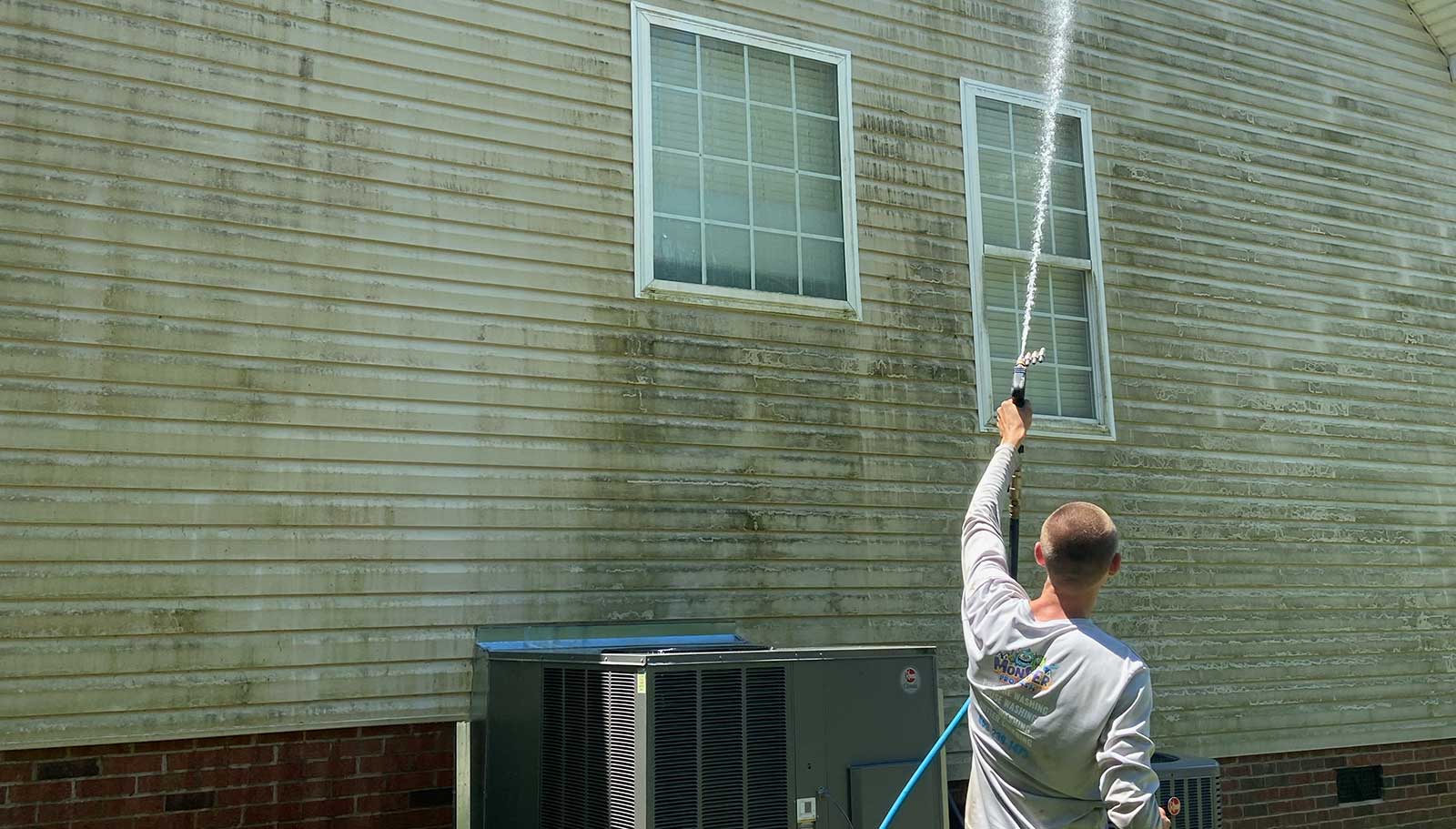
Soft washing uses a specialized pump system to apply a cleaning solution to exterior surfaces at very low pressure. The solution — typically a blend of sodium hypochlorite (similar to pool shock), surfactants, and water — does all the heavy lifting. Here's the process:
- Landscaping and surrounding areas are pre-wetted and protected
- The cleaning solution is applied evenly across the surface using low-pressure spray equipment
- The solution dwells for 15-20 minutes, killing algae, mold, mildew, lichen, and bacteria on contact
- The surface is rinsed gently with low-pressure water (or in some cases, left to rinse with the next rain)
- All landscaping and surrounding surfaces are rinsed thoroughly
Because the solution kills organic growth at the root rather than just removing it from the surface, soft washing results last significantly longer than pressure washing. Algae and mold can start regrowing within weeks of being pressure washed off — after soft washing, most surfaces stay clean for 1-3 years.
What Surfaces Need Soft Washing?
- Vinyl siding — pressure washing can crack it, force water behind it, and void warranties
- Painted wood siding and trim — high pressure strips paint and splinters wood
- Stucco and EIFS — porous materials that absorb water under high pressure, leading to mold inside walls
- Asphalt shingle roofs — all major manufacturers (GAF, CertainTeed, Owens Corning) recommend soft washing and prohibit pressure washing
- Cedar shake siding and roofing — soft, porous wood that splinters under pressure
- Screen enclosures and pergolas — delicate structures that can't withstand high-pressure water
- Fiber cement siding (Hardie board) — durable but paint finish can be damaged by pressure
The Roof Warranty Issue
If you have asphalt shingles (the most common residential roofing material), pressure washing your roof voids the manufacturer warranty. The Asphalt Roofing Manufacturers Association (ARMA) explicitly states that only low-pressure chemical cleaning is acceptable. A contractor who pressure washes roofs either doesn't know this or doesn't care — either way, don't hire them.
Is the Cleaning Solution Safe?
This is the most common concern homeowners have, and it's a fair question. Professional soft wash solutions are biodegradable and break down quickly in the environment. The active ingredient (sodium hypochlorite) is the same chemical used to treat municipal drinking water — just at a higher concentration.
A professional soft wash company takes specific steps to protect your property:
- Pre-wetting all landscaping, grass, and plants before applying solution
- Covering or protecting particularly sensitive or valuable plants
- Rinsing all landscaping thoroughly during and after the cleaning
- Using the correct dilution ratios for each surface type
- Adding surfactants that help the solution cling to vertical surfaces rather than running off onto plants
When applied by a trained technician, soft washing is safe for your landscaping, your pets, and your family. The solution breaks down within hours of application.
Why Not Just Pressure Wash Everything?
Because pressure doesn't kill anything — it just moves it. When you pressure wash mold off your siding, the root system stays embedded in the surface. Within weeks, it starts growing back. You've rented an expensive machine, spent hours on a ladder, and your results last a fraction of what soft washing delivers.
And for surfaces like roofs and siding, pressure creates damage that's expensive to repair: cracked vinyl, stripped paint, water forced behind siding, voided warranties, and gouged wood. The short-term result may look clean, but the long-term cost is significant.
How Much Does Soft Washing Cost?
Soft washing a house typically costs $200-$600, which is comparable to pressure washing. The difference is the results last much longer, so your cost per year of clean results is actually lower. Roof soft washing runs $300-$700 depending on size and pitch. Most professional exterior cleaning companies include soft washing as a standard service.
When Your Home Needs Soft Washing
- Green or black discoloration on siding (algae and mold)
- Dark streaks running down your roof (Gloeocapsa magma algae)
- Siding looks dull, dingy, or has a film on it
- Visible mildew around windows, under eaves, or on north-facing walls
- Preparing your home for sale (one of the highest-ROI curb appeal improvements)
- It's been more than 1-2 years since the last exterior cleaning
Frequently Asked Questions
What is soft washing a house?
Is soft washing better than pressure washing?
How long does soft washing last?

About the Author
Brayden Rollins
Brayden is the owner and operator of Monster Pro Wash, a locally owned exterior cleaning company serving the Columbia, SC metro area. With hands-on experience cleaning hundreds of homes and businesses across the SC Midlands, he knows what works (and what doesn't) when it comes to pressure washing, soft washing, gutter cleaning, and roof cleaning. When he's not on a job site, he's writing guides to help homeowners take better care of their properties.