

A dirty concrete driveway can make your entire property look neglected. Oil stains, red clay (a constant problem here in the SC Midlands), tire marks, mold, and years of grime build up until your driveway looks permanently stained. Pressure washing is the fastest way to make it look new again — but technique matters more than most people think.
Done wrong, you'll end up with "tiger stripes" — visible lines from uneven cleaning that look worse than the original dirt. Here's how to do it right.
Equipment You'll Need
- A pressure washer rated at least 3,000 PSI (consumer models under 2,000 PSI won't cut it for concrete)
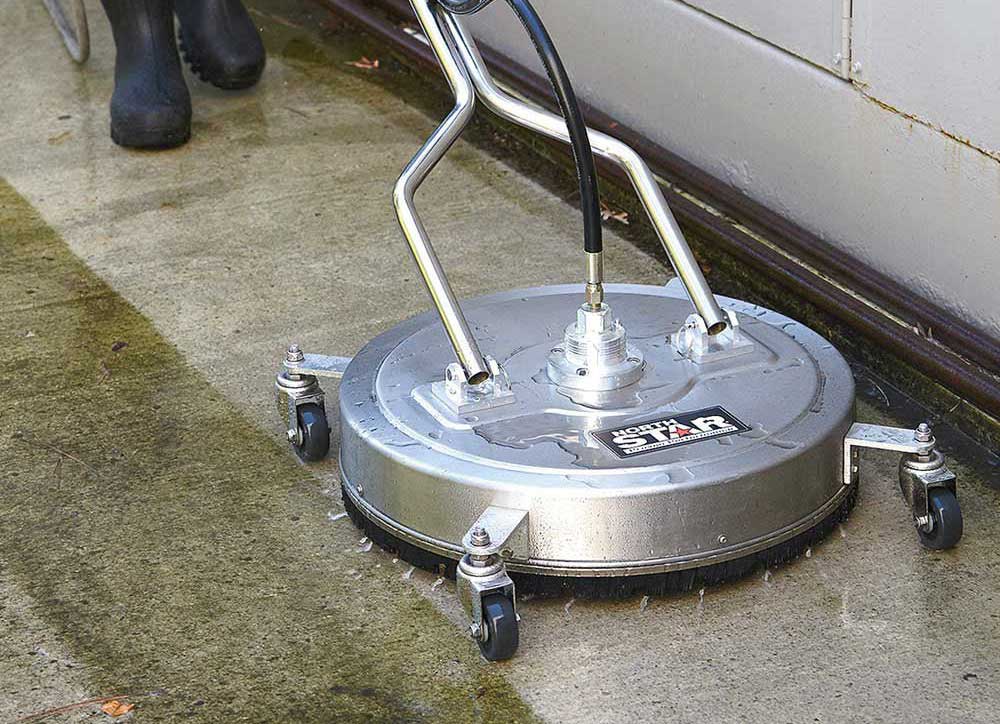
- A surface cleaner attachment (the spinning disc that prevents tiger stripes — this is the key tool)
- A 25-degree nozzle for edges and detail work
- A concrete-safe degreaser for oil stains
- A garden hose for pre-wetting and final rinsing
- Safety gear: closed-toe shoes, safety glasses, ear protection
The Surface Cleaner Is Not Optional
If you try to clean a driveway with just a wand and nozzle, you will get tiger stripes. A surface cleaner uses two spinning jets under a housing to clean evenly. You can rent one from most equipment rental shops for $50-$75/day. This single attachment is the difference between amateur results and professional results.
Step-by-Step: Pressure Washing Your Driveway
Step 1: Clear and Pre-Treat
Remove everything from the driveway — cars, garbage cans, planters, basketball hoops. Sweep off loose debris. Pre-treat oil stains and heavily soiled areas with a concrete degreaser, letting it sit for 10-15 minutes. For red clay stains (the bane of every SC driveway), a degreaser won't do much — you'll need the pressure and possibly a dedicated clay stain remover.
Step 2: Apply Cleaning Solution
Using a low-pressure soap tip (black nozzle) or a downstream injector, apply a concrete cleaning solution across the entire driveway. Let it dwell for 5-10 minutes but don't let it dry. This step loosens embedded dirt and organic growth so the pressure washer doesn't have to work as hard.
Step 3: Surface Clean in Overlapping Passes
This is where the magic happens. Attach your surface cleaner and work in slow, steady, overlapping passes. Start at the garage and work toward the street so dirty water flows away from cleaned areas. Key technique tips:
- Move at a consistent speed — rushing creates uneven cleaning
- Overlap each pass by 2-3 inches to avoid visible lines
- Work in a logical pattern (like mowing a lawn) so you don't miss spots
- Don't stop and start in the middle of a pass — that creates marks
- Keep the surface cleaner flat and level at all times
Step 4: Detail the Edges
Switch to the 25-degree nozzle for edges along the garage, walkways, and curbs where the surface cleaner can't reach. Hold the wand at a consistent distance (8-12 inches from the surface) and angle to keep the water flowing away from you. Be careful near landscaping — high-pressure water can strip mulch and damage plants.
Step 5: Final Rinse
Do a final rinse with the 25-degree nozzle or your garden hose to wash away any remaining cleaning solution and dirt. Rinse from high to low (garage to street). Stand back and inspect — if you see any missed spots or streaks, hit them now while everything is still wet.
Common Mistakes to Avoid
- Using a zero-degree nozzle on concrete — this etches lines into the surface that are permanent
- Cleaning without a surface cleaner — tiger stripes every time
- Holding the wand too close — causes surface damage and uneven cleaning
- Skipping the pre-treatment — makes the pressure washer do twice the work
- Pressure washing on a windy day — overspray damages cars, windows, and landscaping
- Starting at the street and working up — you'll track dirty water over clean concrete
DIY vs. Hiring a Professional
| Factor | DIY | Professional |
|---|---|---|
| Cost | $100-$200 (rental + supplies) | $150-$350 |
| Time | 2-4 hours | 30-60 minutes |
| Equipment | Rental-grade | Commercial-grade (much more powerful) |
| Surface cleaner quality | Basic rental unit | Professional-grade with higher flow rate |
| Risk of tiger stripes | Higher | Very low with commercial equipment |
| Pre-treatment | Basic degreaser | Professional-grade cleaning solutions |
The math is close enough that many homeowners decide the time savings and better results are worth hiring a professional. A commercial pressure washer puts out significantly more water flow than a rental unit, which means the surface cleaner works better and the job goes faster. Where it takes you 3 hours with a rental, a professional typically finishes in under an hour.
How Often Should You Pressure Wash Your Driveway?
For most homes in the Columbia, Lexington, and Irmo area, once a year is the sweet spot. Properties with heavy tree coverage, north-facing driveways, or high traffic may benefit from twice-yearly cleaning. The best time is spring — after the pollen season and before the summer heat bakes stains into the concrete.
Frequently Asked Questions
How much does it cost to pressure wash a driveway?
Will pressure washing remove oil stains from my driveway?
What PSI do I need for a concrete driveway?

About the Author
Brayden Rollins
Brayden is the owner and operator of Monster Pro Wash, a locally owned exterior cleaning company serving the Columbia, SC metro area. With hands-on experience cleaning hundreds of homes and businesses across the SC Midlands, he knows what works (and what doesn't) when it comes to pressure washing, soft washing, gutter cleaning, and roof cleaning. When he's not on a job site, he's writing guides to help homeowners take better care of their properties.