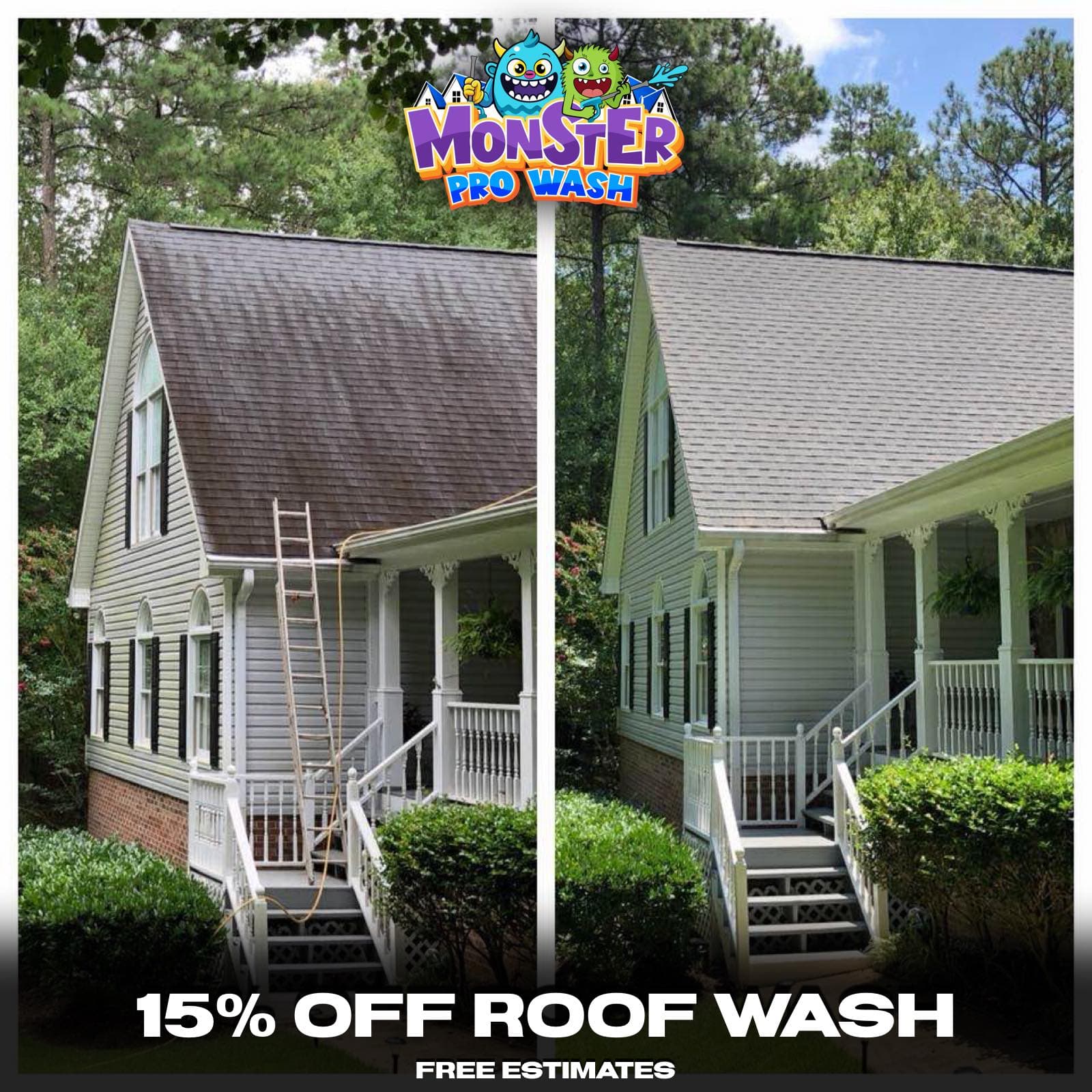

Those dark black streaks running down your roof aren't dirt — they're a cyanobacterium called Gloeocapsa magma that's literally eating your shingles. It feeds on the limestone filler in asphalt shingles, and in humid climates like the SC Midlands, it spreads fast. The good news: you can clean it safely. The bad news: most people do it wrong and damage their roof in the process.
Why You Should Never Pressure Wash Roof Shingles
This is the single most important thing to know about roof cleaning: never, under any circumstances, use a pressure washer on asphalt shingles. Pressure washing your roof will:
- Strip the protective granules off your shingles, shortening their lifespan by years
- Void your manufacturer warranty (GAF, CertainTeed, Owens Corning all prohibit it)
- Force water under shingles, causing leaks and interior damage
- Create uneven wear patterns that look worse than the algae did
A pressure washer operates at 3,000-4,000 PSI. Your shingles need cleaning at 100-500 PSI — roughly the pressure of a garden hose. The difference isn't subtle. It's the difference between cleaning your roof and destroying it.
The Right Way: Soft Washing
Soft washing is the manufacturer-recommended method for cleaning asphalt shingles. Instead of blasting algae off with water pressure, soft washing uses a cleaning solution that kills the organisms at the root. Here's how it works:
- A biodegradable cleaning solution (typically sodium hypochlorite mixed with surfactants) is applied to the roof at very low pressure
- The solution sits on the surface for 15-20 minutes, killing algae, mold, lichen, and bacteria on contact
- The roof is rinsed gently — or in many cases, the next rain washes the dead organisms away naturally
- Because the organisms are killed at the root, results last 2-5 years (vs. months with pressure washing)
Can You DIY Roof Cleaning?
Technically, yes — but there are real risks. Roof cleaning involves working at height, handling chemical solutions, and protecting your landscaping from runoff. Here's an honest assessment:
What You'd Need for DIY
- A pump sprayer or 12V soft wash system (not a pressure washer)
- Sodium hypochlorite (pool shock) at the correct dilution ratio
- Surfactant to help the solution stick to the roof surface
- Garden hose for pre-wetting and rinsing landscaping
- Tarps or plastic sheeting to protect sensitive plants
- Proper PPE: chemical-resistant gloves, safety glasses, non-slip shoes
Why Most Homeowners Hire a Pro
- Getting the chemical concentration right is critical — too weak and it doesn't work, too strong and it can damage shingles and kill landscaping
- Climbing on a wet roof with chemicals is dangerous
- Even from a ladder, achieving even coverage on a full roof is difficult without commercial spray equipment
- Professional soft wash equipment can treat an entire roof from the ground in many cases, eliminating the need to climb on the roof at all
- Professionals pre-wet and protect your landscaping systematically — a missed step can kill expensive plants
What About Other Roof Types?
| Roof Type | Safe Cleaning Method | Notes |
|---|---|---|
| Asphalt shingles | Soft wash only | Never pressure wash — voids warranty |
| Metal roofing | Soft wash or gentle rinse | More forgiving but chemicals still do the heavy lifting |
| Clay/concrete tile | Soft wash preferred | Pressure washing can crack tiles and strip sealant |
| Cedar shake | Soft wash only | Extremely delicate — high pressure splinters the wood |
| Flat (TPO/EPDM) | Soft wash with appropriate solution | Solution concentration varies by membrane type |
How Often Should You Clean Your Roof?
Most homeowners in the Columbia, SC area need a roof cleaning every 3-5 years. Factors that speed up regrowth include heavy shade (especially on north-facing roof planes), proximity to trees and bodies of water, and higher humidity levels. If you're near Lake Murray or in a heavily wooded area like parts of Irmo or Chapin, you may see algae return faster.
A clean roof isn't just about appearance. Algae-covered shingles absorb more heat (increasing your cooling bills), retain moisture (accelerating deterioration), and reduce your home's curb appeal and resale value.
Frequently Asked Questions
What are the black streaks on my roof?
Will cleaning my roof void the warranty?
How long does a roof cleaning last?

About the Author
Brayden Rollins
Brayden is the owner and operator of Monster Pro Wash, a locally owned exterior cleaning company serving the Columbia, SC metro area. With hands-on experience cleaning hundreds of homes and businesses across the SC Midlands, he knows what works (and what doesn't) when it comes to pressure washing, soft washing, gutter cleaning, and roof cleaning. When he's not on a job site, he's writing guides to help homeowners take better care of their properties.